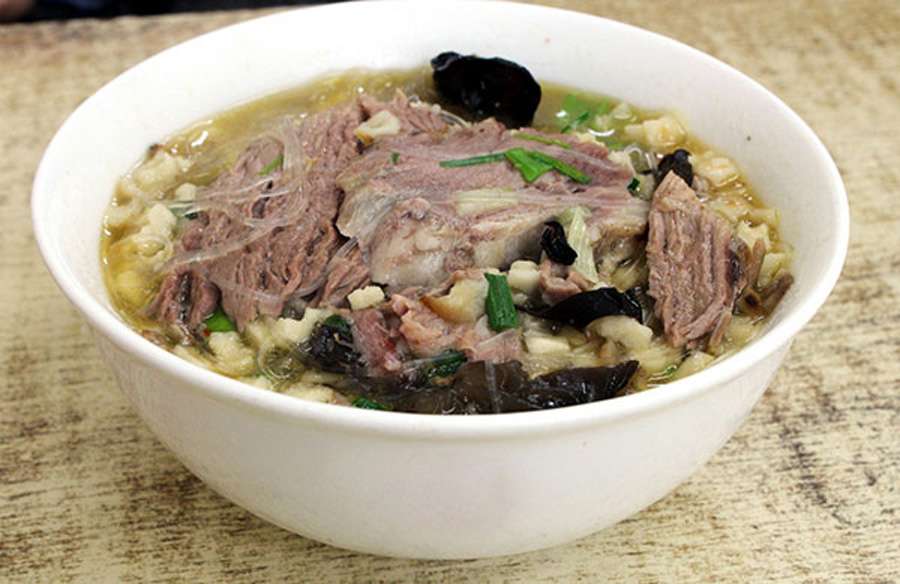
Yangrou Paomo
Introduction
Yangrou Paomo, a beloved dish originating from Xi'an, the capital city of Shaanxi province in China, is a remarkable representation of the rich culinary traditions that have been influenced by the ancient Silk Road. This dish, whose name translates to "pita bread soaked in lamb soup", features a unique blend of shredded pita bread combined with a robust lamb broth. Often garnished with scallions, coriander, and chili, Yangrou Paomo is celebrated for both its comforting flavors and its cultural significance in Xi'an. The dish is traditionally served by soaking chewy pita bread in a hearty lamb stew, creating a satisfying, savory experience that has become a staple of Shaanxi cuisine.
History
The historical roots of Yangrou Paomo can be traced back to the influence of the Silk Road, an ancient network of trade routes that connected the East and West. The Silk Road was instrumental in facilitating the exchange of goods, cultures, and culinary practices, contributing to the diverse food landscape of Xi'an. About 4,500 years ago, beef and mutton, key ingredients in Yangrou Paomo, were introduced to China from Western Asia. This exchange is a testament to the dynamic cultural interactions that occurred along the Silk Road, shaping the development of dishes such as Yangrou Paomo. The city of Xi'an, which served as a critical hub on these routes, absorbed various influences, resulting in a culinary heritage that includes this iconic lamb stew.
Ingredients
Yangrou Paomo's core ingredients reflect a harmonious blend of local produce and influences brought through the Silk Road. The main components include mutton, which is stewed to create a rich, flavorful broth, and pita bread, known locally as "mo", which is often dense and chewy. The dish is traditionally enhanced with scallions, coriander, and chili, which add layers of freshness and spice. The pita bread is typically torn into small pieces before being immersed in the lamb soup, allowing it to absorb the flavors of the broth. These ingredients combine to create a dish that is both hearty and aromatic, showcasing the culinary traditions of Xi'an.
Preparation
Preparing Yangrou Paomo involves several steps that highlight the dish's complexity and depth of flavor. First, the mutton is carefully stewed with aromatic spices to develop a rich and savory broth. Meanwhile, the pita bread is shredded into small pieces, a process that often involves diners breaking the bread themselves as a traditional practice. Once the lamb broth is ready, the shredded bread is added to a bowl and topped with slices of stewed mutton. The hot broth is then poured over the bread, allowing it to soak and soften. Finally, garnishments such as scallions, coriander, and chili are added, providing a fresh and spicy contrast to the hearty soup. This method of preparation not only enhances the dish's flavors but also offers an interactive dining experience.
Variations
Regional Differences
While Xi'an is the dish's birthplace and primary locale, Yangrou Paomo has variations across different regions in China, each reflecting local tastes and ingredients. In some areas, beef might replace mutton, resulting in a dish known as Niurou Paomo. These regional differences can also include variations in the spices used in the broth or the texture of the pita bread, offering diverse interpretations of the traditional recipe. Despite these differences, the core concept of combining bread with a hearty stew remains constant, paying homage to the dish's roots.
Modern Adaptations
Modern adaptations of Yangrou Paomo have emerged as chefs and culinary enthusiasts explore new ways to innovate this traditional dish. Some contemporary versions might include additional ingredients like mushrooms, tofu, or different herbs, providing a twist on the classic flavor profile. These adaptations reflect the ongoing evolution of culinary practices in Xi'an and beyond, as well as the dish's adaptability to modern palates. While staying true to its origins, Yangrou Paomo continues to evolve, demonstrating the dynamic nature of food culture.
Cultural Significance
Yangrou Paomo is not merely a dish but a cultural emblem of Xi'an, embodying the historical and social influences of the Silk Road. This dish symbolizes the exchange of ideas and culinary practices that have shaped the region's identity over centuries. It is a testament to the enduring impact of cultural interactions and the shared culinary heritage that binds communities together. Yangrou Paomo's popularity in Xi'an and its ability to draw both locals and tourists alike underscore its role as a culinary ambassador of the city's rich history and cultural diversity.
Popularity and Global Influence
Yangrou Paomo's popularity extends beyond Xi'an, capturing the interest of culinary enthusiasts worldwide. As an iconic dish of Shaanxi cuisine, it has gained recognition on the global stage, attracting attention from food critics and travelers alike. The dish's unique combination of textures and flavors showcases the richness of Chinese culinary heritage, making it a subject of interest in international gastronomy. Yangrou Paomo not only highlights the local traditions of Xi'an but also serves as an example of how regional cuisines can influence and inspire food cultures around the world.








